From binary to systems thinking on climate, before it's too late
And by the way, if you are at extreme risk it’s normal to shit yourself.

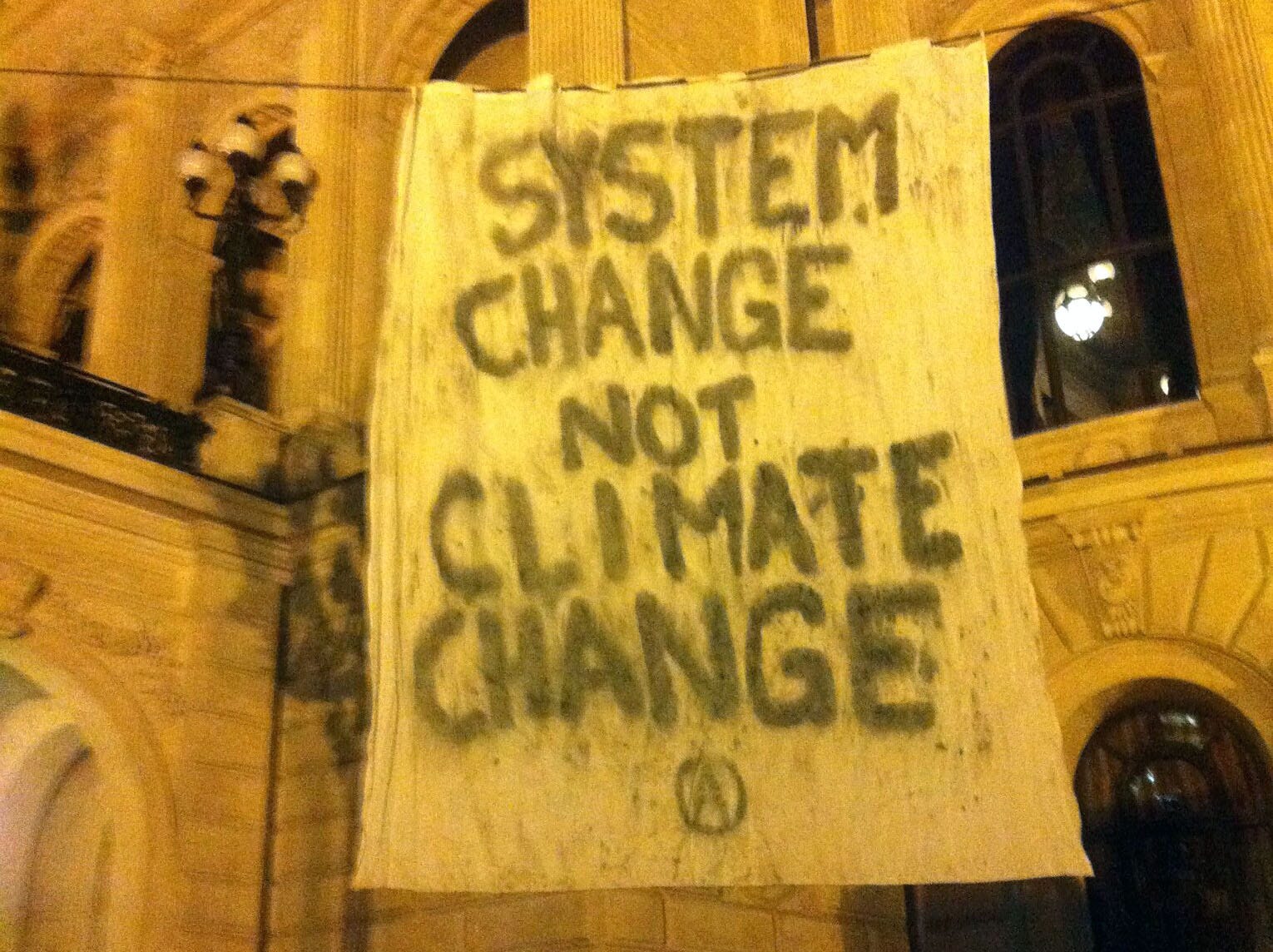
I want to be clear: we have already made a planetary-scale intervention on the Earth’s energy system balance, it’s fuelled by our economy, and it’s a catastrophically bad thing.
That’s the context for this reflection on the geoengineering, SRM, SAI, and climate stabilisation space. The wider framing – not as a carbon issue, not as climate, but as potentially planetary-scale interventions on the Earth’s energy system balance – is the point I want to reflect on.
Most people, if they think about it at all, know the crisis we’re in by the name ‘climate change’. Some call it ‘climate emergency’, some ‘climate collapse’. My thoughts on this – first shared with Anni Pokela from Operaatio Arktis at the ATLAS25 conference in Helsinki – are that we need to reframe climate change: from focusing primarily on carbon to focusing on the Earth’s energy imbalance we’ve created with this global capitalist economic system that’s been forced upon us.
And through that reframing process, I have realised it’s not that simple or binary: it is rather multiple things at once, like the undermining of the ocean as a carbon sink, microplastics, forever chemicals, aerosol pollution reduction, and more. These all have to be in the frame.
We’ve not won this fight. So I’ve been reflecting on what we still need to work out, what we need to say loudly, and how to get people to understand the Earth’s energy imbalances, how we might attempt to stabilise those imbalances, and ideas of reflectivity: the Earth-energy kind, and the thinking back over things kind.
1: It’s the economy that needs solving
An Earth-system-level intervention is already happening. It’s the product of our economic system and how it impacts the Earth’s energy systems balance. The extreme heat, floods, melting ice, droughts and food system shocks, are all evidence of this imbalance.
Perhaps it would be very sensible, then, to link the solution of rebalancing the Earth’s energy system to a solution of transforming our economy. But none of the current mainstream solutions, nor any of the newer ideas found in the geoengineering, SRM, or climate stabilisation space, are actually tied to changing the economy.
Instead, they seem to be expected to perform within the economy as it exists. For example, I’ve been thinking that the research into geoengineering solutions so far must have an expectation of capital return. This would mean that the R&D in this space could lead, inevitably, to projects being realised, because people don’t like investing money in things that don’t happen. Somebody has paid for it, and anyone who pays for anything in business expects to get something back.
But what if the R&D reveal it to be a dangerous idea? Where does that leave the issues of global or regional governance, reversability, or unintended consequences, in relation to these critical questions about the Earth’s energy imbalance?
Or to put it plainly: the intervention itself must be wired into a transformation of the economy, not paid for by some new budget line in the existing global economic system. So many of the current interventions proposed are about buying us time, but it’s a waste of time if the economy isn’t rewired at the same time.
This expectation on capital return is certainly the case in fossil fuel infrastructure: where exploration has occurred, the investment in that effort is expected to make a return. So exploration is never neutral. Research is never neutral. Sometimes R&D fails, sure. But the point is, it’s not done neutrally.
If these geo solutions were instead tied to the healthy functioning of the economy, i.e. a particular solution was tied into the food system, or a solution was tied into our energy production system, then we might be looking at something more sensible. But so far, none of the ideas currently in R&D do that.
You might say this is glaringly obvious if you think about mitigation. CO2 emissions pretty much track GDP so growth means we collapse things faster. And of course only 35 countries produce 91% of emissions, so that growth is of course only for the benefit of the rich, and it’s literally the reason we have to consider geo interventions in the first place.
As James Hansen said to me at that Helsinki conference, the American public simply won’t allow the shut down of the fossil fuel industry, he thinks that won’t be possible. So we have to find another way to stabilise the Earth’s energy imbalances. I don’t want to agree but I can see why he feels like that.
This is why I think trans-disciplinary work and sense-making and sense-relating is needed, which is my second point.
2: Working across disciplines matters
We need to think about what to do about the Earth’s energy imbalance collaboratively and with humility. This means across boundaries and disciplines. Just because a proposed intervention may create an effect you think will help – such as reducing the energy intake of the Earth system – it doesn’t actually mean that it can be made economically viable. And even then, if it can be made economically viable, that doesn’t necessarily mean that it can be made long-term safe.
Nor does it necessarily mean that we can develop any form of governance that can deal with the complexities of it, or indeed the moral quandary when it comes to “who is at the table”, how the decision gets made, and who suffers the good and the bad impacts, who pays for it, etc.
Without working collaboratively across boundaries, people in their own disciplines – especially the technology optimists, perhaps – will simply look at a proposed solution and assume that as long as it works, all those other factors will be fine. I worry about any work rooted in optimism now, its done us fuck all good so far.
This is one of the key findings in the new ARC (Advanced Research for Climate Emergencies) Field Notes research on the effective ways people are finding to talk about these proposals, in terms of fundraising, legitimacy, and permission space issues.
That is, there is much more need for the connective infrastructure to help people work across disciplines. (Another of their key findings: talking about “climate stabilisation” opens doors and minds in ways that “geoengineering” or “climate emergency” just don’t.)
3: Don’t dismiss the generalists and the movements.
Another reason why trans-disciplinary work is necessary is because I also think that specialists have patronised people.
When myself, Gail Bradbrook and Roger Hallam (as co-founders of XR) released our statement about cloud brightening interventions and aerosols, we all reflected on the fact that we were told not to talk about things that we didn’t have enough information about, despite the fact that the risk was clearly present. This was a case of science experts who had “skin in the game” thinking they should stop us from talking about something (aerosols) which they themselves were leaving out of the serious discourse, for fear of getting something wrong.
We also must not let privileged people and specialists control the stabilisation discussions; we currently risk rejecting collective wisdom making and the inclusion of fringe thinking which may also be very important.
The changes in public order laws in Britain in recent years have suppressed dissent and damaged the social movement fabric of the country. A friend of mine has described social movements as a thing which makes society cleverer in an embodied and a relational way. Yet they are being legislated against at precisely the time when we need societal wisdom and collective intelligence the most. Plus, non-experts tend to have a lower appetite for risk, so we need the people to reason on this topic and have a say.
4: Albedo and the reflectivity crisis
One thing that we used to talk about at the beginning of XR was that we needed to pay attention to the feedback positivity around loss of albedo.
Somebody said to me the other day that we are in a reflectivity crisis. So, if my thoughts previously – about changing our focus from carbon to Earth energy imbalance – seem like an important reframe that could change the debate and make new things possible, or at least make new conversations possible, the idea that we’ve entered into an Earth system reflectivity crisis is also interesting, as a way to move the conversation towards action.
But it’s really important we don’t shift the problem around, to say “oh it was that, and now it’s this and only this”. That’s not what I’m saying. It isn’t ONLY a reflectivity crisis.
The problem is – and this is why a personal, intellectual reflective practice is so important for all of us – we need to have a multifaceted awareness of all the problems facing us. And I know, it’s really overwhelming to talk both about the scale and range of the horror, and the scale and range of the constructive tasks we need to understand and build to make our way forward.
5: Lead with risk analysis
Another key finding in the recent ARC Field Notes paper (which conducted in-depth interviews with people in the field) was that those leading with the risk, or risk analysis, were able to get more funding and more permission than those who led with excitement around the tech.
I’ve been labouring this point. A risk analysis frame is the only frame that we should really look at things through.
And that’s in part because the need for certainty around our analysis and around knowing what we’re talking about in terms of the Earth’s energy system imbalance, around expertise and science and statistics, just does not fit with a risk analysis frame. And that’s the point.
This need for “certainty” (the IPCC’s “probability”) has done so much damage in slowing down action. It has been impossible for the average person to see the seriousness of what has been shown in the research when it’s presented on a scale of uncertainty. On top of this, experts routinely moodsplain each other and the activists for having feelings about the fact that we’re trapped on a planet on fire. If you are at extreme risk, it’s normal to shit yourself.
Of course some people still go on about the “precautionary principle”, but nobody really had any intention of organising society on the basis of the precautionary principle whilst we were working under capitalism. Why is that? Because capital wants certainty, and capital wants to know it’s getting its returns. So it won’t do the R&D unless it’s getting its return.
Reflecting on reflection
Those are my five reflections on checking back what I’d said to Anni in our conversation in Helsinki. I found myself having a few similar thoughts, and a few new ones. Some of the things that I’ve noticed felt like they offer a potential for development of thought, and these seven reflections have come out of that.
So it’s good to go back and reflect on your ideas, and check to see if you still agree with them. For most ordinary people, one of the worst things that you can ever do is watch yourself back talking on video, or listen to yourself on the radio.
But, having been a spokesperson for the climate movement and having religiously watched my interviews back in order to try and learn how to be better, I’ve come to terms with all of that awkwardness. Having said that, I still have a tendency to go back and think, “I wonder what I said?”!
Watching back my conversation with Anni, and having always massively admired these young Finnish people who founded Operaatio Arktis to have just these conversations, I’m struck and grieved by the knowledge that all of our lives might depend on making a systems-level intervention to reduce the energy imbalance in the Earth’s system.
The fact is though, we have done it with fossil fuels. And maybe we need to do it again. If, like James Hansen, you have sat and looked at the numbers only to deduce that it is absolutely 100% necessary to make interventions of this kind, then where does that leave us?
We are governing tipping points already
To be honest the conference, as amazing as it was, was also a deluge of horror. There was so much credible, robust science and experience shared that I don’t think everything could be absorbed properly.
One thing I am not sure was absorbed properly was the point from climate scientist Stefan Rahmstorf, who said that for approximately the next 10-20 years, we will be deciding how we govern tipping points. And after that point, we will have governed our way through shutting down the AMOC and into the next era of planetary existence…
Which if you think about it is almost impossible to think about. It’s like Freud’s claim that no one can imagine their own death.
Final thought: there are choices to be made
Right now, it looks like Stardust has got the most money in the field, around $75m from two rounds of funding. But they’re R&Ding their tech in private. Do I trust their promises on deployment and governance?
If anyone had given the climate movement $75m we would have made bigger strides towards the success we need. But that wasn’t what people chose to fund, leaving many in the “radical” movement working on scraps, or with salaried professionalism and charity gagging clauses in the third sector.
Not deciding on these questions of climate intervention is still a choice. And to be honest, all our options are awful. The best I can do is know, and share, as much as possible about what is happening, so at least I can say I tried to give us the best chance possible to make a decision.
Have you come across the work of the MEER.ORG people? It seems they are working on the very thing you are talking about. By creating as many reflective surfaces as humanly possible, we could change the energy balance which could buy us time for the systems changes that are necessary. I feel their approach is much better than space reflectors or spraying chemicals in the air and any of the other geoengineering ideas.
I absolutely agree that the only way society survives this poly crisis is through a complete systems overhaul that changes the way people think. We need to change the "I" and "mine" to "we" and "ours" when it comes to the ideas of what prosperity and growth are supposed to look like at a time when degrowth is the course of action we should he taking. This is not going to happen within capitalism and current ideas of how markets should be used.
Good. With u on systems. Check Andrew Ds work.
This is also a good article (ignore boring title):
https://drive.google.com/file/d/126WzYXEsYrRLMydb4iVTtG9TNuocazVK/view?usp=drivesdk